
By Rebecca Odhiambo
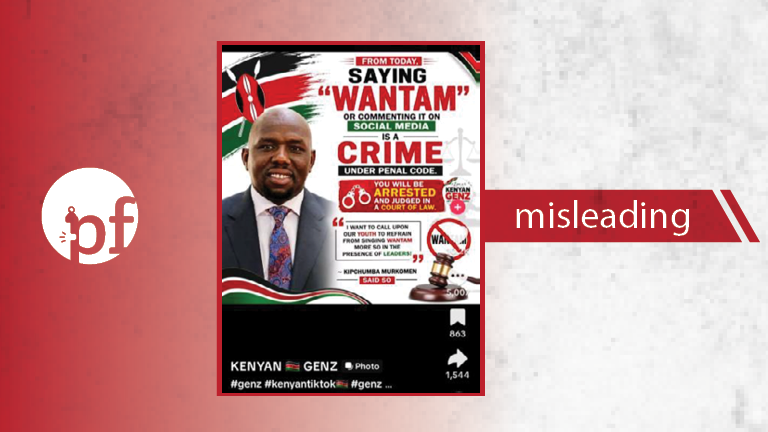
A graphic posted on August 3, 2026, by the account @254ilovemycountry (KenyanGenz) on TikTok claims that saying “Wantam” or commenting about it on social media is a crime under Kenya’s Penal Code and that anyone who does so will be arrested and taken to court. The graphic attributes the statement to Interior Cabinet Secretary Kipchumba Murkomen and urges young people to refrain from using the slogan, particularly in the presence of leaders.

The post received 335.2k views, 10.2k likes, 5,007 comments, 863 saves, and 1,544 shares at the time of review, indicating more people had encountered the claim. The account mainly shares Kenyan political and current affairs content presented through short videos and graphic-based posts featuring political commentary and claims.
Background
“Wantam” is a political slogan derived from the phrase “one term”, which emerged following a fallout within the ruling Kenya Kwanza coalition, after the impeachment and removal from office of the then Deputy President Rigathi Gachagua by the Senate in October 2024.
It has been used by President William Ruto’s critics to express the view that he should serve only one presidential term. The slogan has featured in political rallies, public gatherings, and social media discussions in Kenya. It has also been used by opposition groups, the Gen Z demographic, and supporters of former Deputy President Rigathi Gachagua to express dissatisfaction with President William Ruto’s administration.
The phrase first gained significant traction during a Democratic for Citizens Party (DCP) rally which occurred in May 2025. It quickly mutated from a political speech punchline into a viral internet phenomenon. The friction reached a boiling point in August 2025 following a viral video of a police officer chanting “Wantam”. In response, Interior CS Kipchumba Murkomen delivered a speech in Narok warning that any civil servant, chief or law enforcement officer caught engaging in active politics or using disrespectful slogans against the Head of State would face administrative dismissal and sacking.
Verification
A review of Kenya’s current legal framework found no offence in the Penal Code specifically criminalising the word “Wantam” or ordinary commentary on social media.
Section 40 of the Penal Code defines treason as involving serious acts such as intending to unlawfully depose the President or overthrow the government, accompanied by the expression or declaration of those intentions. Simply saying “Wantam,” which is a political slogan advocating for a one-term presidency, does not by itself meet the legal definition.
The Constitution also protects freedom of expression. Article 33 gives every person the right to seek, receive and impart information and ideas. The protection has limits, including incitement to violence, hate speech and advocacy of hatred. Political expression is therefore not automatically a criminal offence merely because it is critical of the government or president.
However, Kenya’s current Conflict of Interest Act, 2025, contains provisions on political neutrality. Section 25 restricts certain appointed public officers from engaging in political activity that may compromise or appear to compromise the political neutrality of their offices, and contravention of that provision is an offence.
Murkomen did make remarks concerning the use of “Wantam” in 2025, but those remarks were directed at public servants and their political conduct. His comments came amid concerns over public officers openly criticising the government and engaging in political activities, including the use of anti-government slogans. He specifically referred to chiefs, assistant chiefs, police officers and other public servants, arguing that those who choose to serve in government should remain focused on implementing the policies of the administration in office rather than participating in political campaigns or sloganeering. There is no credible evidence that he made the broader statement attributed to him in the graphic in 2026, claiming that any Kenyan who says or mentions “Wantam” on social media commits a crime under Kenya’s Penal Code.
Verdict
The claim Murkomen declared that saying “Wantam” or mentioning it on social media is a crime under Kenya’s Penal Code is MISLEADING.


Add comment